Six Students Involved in Hazing Expelled from Waverley College

Six students involved in a hazing incident at Waverley College have been expelled from the Catholic private all-boys school, school principal Graham Leddie has confirmed.


The incident apparently happened in late October between a group of Year 7 and Year 9 kids. Mr Leddie acknowledged that the younger students “provoked” the Year 9 boys and displayed “silly behaviour” by throwing fruits during their lunch break. 

However, the school authorities believed that the older boys “completely disproportionately” responded to the provocation thus the incident got out of hand. The principal said that the silliness turned into an assault and humiliation, even as most of the younger victims were actually not involved in the provocation. 

Waverley College
Photo Credit: Waverley College/Facebook

Mr Leddie said that the response was “unacceptable on every level” thus the school made the right action to cancel the enrolment of six Year 9 students, following an investigation. He was made aware of the hazing by some of the parents of the Year 7 students and immediately suspended those involved. 

According to reports, the Year 9 boys used belts to beat the Year 7 boys, who were also ordered to lick the shoes of the other kids or bark like a dog. The hazing happened inside a classroom that had no CCTV. 

Some of the parents also spoke with 2GB radio host Ben Fordham and said that this has been a “systemic problem” in Sydney’s private schools. One father denounced the actions of the older kids, saying they were “gutless” for picking on students a lot younger than them. 

Waverley College has initiated appointments with a psychologist for the students. NSW Police was also made aware of the incident after a parent went to the police station to file a report. 


Park’Npay Expands to Waverley

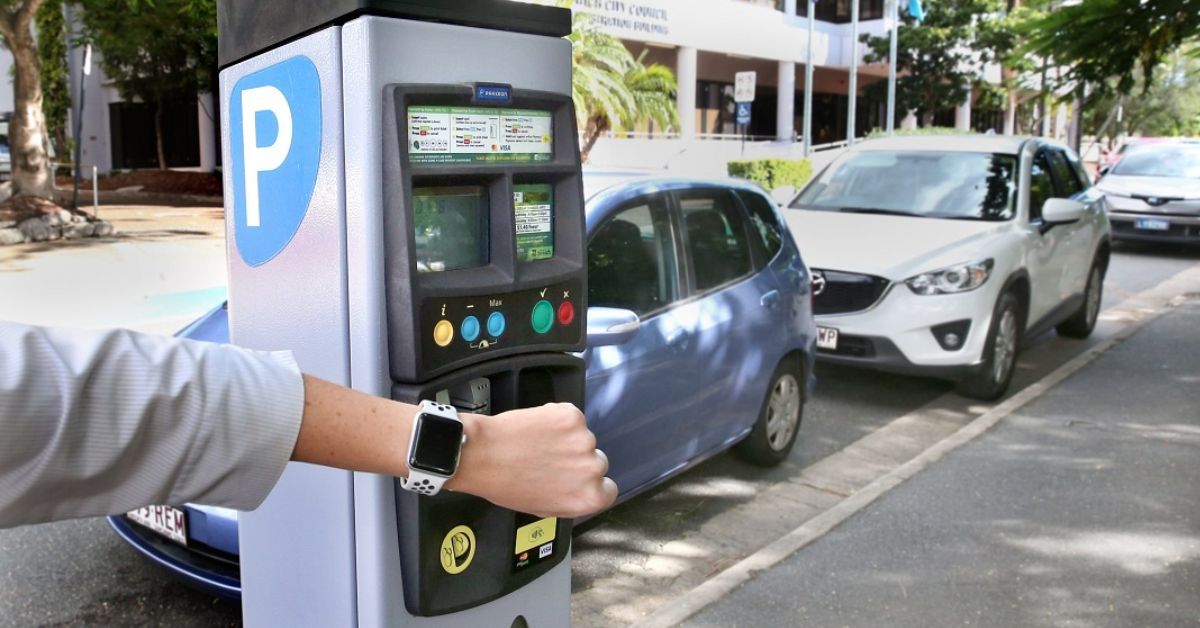
Paying for parking when visiting Bronte, Bondi Junction and Bondi Beach is now easier as the popular Park’nPay app goes live in the Waverley council area.


Waverley Council becomes the latest location to be part of the Park’nPay app service coverage. This update was announced in early December 2022 by Minister for Customer Service and Digital Government Victor Dominello who said that it will help those who live, work and visit these areas find a parking spot hassle-free.

According to Mr Dominello, Park’nPay reduces the headache of parking by allowing drivers to view parking spots, pay and top-up for parking remotely, and receive a notification 10 minutes before their parking expires, all on their smartphones.

He added that about 2,600 metered parking spots are available through the app, and they only need to pay for the time they use, instead of paying upfront.

Park’Npay Expands to Waverley
Photo Credit: Facebook / Shelley Hancock MP

“Being able to see real-time availability for more than 800 parking spaces, plus 68 accessible bays for disabled parking is great news for one of the city’s most visited areas, especially over summer.

“Whether heading for a swim, enjoying the shops or taking a coastal walk, the ability to top-up parking from anywhere means people no longer have to rush back to the meter every couple of hours which takes a lot of stress out of their day.

Member for Vaucluse Gabrielle Upton welcomed the activation of the new Park’nPay app service in the Waverley Council area, calling it a “big win for the local community and the thousands of visitors to the area looking to explore the shops, parks, beaches and businesses that Bronte, Bondi and the eastern suburbs has to offer”.

Mayor of Waverley Paula Masselos said that being one of the most densely populated LGAs in Australia, Park’nPay will help people plan their trips and access available parking spaces in the municipality. She said that it is “always welcome” to have an innovative app that will make people’s car journeys easier.

Park’nPay is available across 48 suburbs in NSW including The Rocks, Ryde, Double Bay, Cumberland, Rozelle, Balmain, Leichhardt, Liverpool, Mosman, Central Coast, Hunters Hill, Burwood, The Northern Beaches, Port Stephens, Willoughby, Armidale, Parramatta Park, Sydney’s Royal Botanical Gardens and NSW National Parks.


The app also provides information on real-time parking availability for 26 Transport for NSW Commuter Carparks, locations of electric vehicle charging stations and more than 18,000 private driveways to rent.

If you would like to nominate a suburb to be included in the next Park’nPay roll-out, visit the Park’nPay website here.

Waverley War Memorial And The Generosity Of The Vickery Family

Did you know that the Waverley War Memorial Hospital, now known as the Uniting War Memorial Hospital, was a gift from the Vickery Family?


Read: What Makes Waverley Community Garden Popular with Green Thumbs


Ebenezer Frank Vickery, a solicitor and philanthropist resolved that if his two brothers came back home from the First World War, he would convince the rest of the family to donate the property, called ‘Edina’ in memory of his father, Ebenezer Vickery Jr. who died in 1915.

Vickery family, 1901, at Ebenezer and Jane’s golden wedding anniversary (Photo credit: waverley.nsw.gov.au)

Edina was a late Victorian mansion built by his grandfather, Ebenezer Vickery. It was named after Edinburgh Scotland, in honour of Ebenezer’s wife, Jane, and her heritage. It was the family’s residence for around six decades.

The senior Ebenezer spared no expense on Edina. It’s been known that he would travel all the way to Italy with his architect to buy marble fireplaces and chandeliers. He also came home with some second hand tiles for the verandahs and main hall that had been taken from the ancient city of Pompeii.

Ebenezer Vickery at the Aborigines Mission Station, Cairns, 1904 (Photo credit: waverley.nsw.gov.au)

Beyond their wealth, the Vickery family was known for their strong commitment to the Methodist Church. In fact, Ebenezer Vickery was dubbed as a ‘staunch Methodist’ with a strong evangelical dedication to his church.

In 1919, all members of the family donated the magnificent home and grounds of Edina to the Methodist Church.

Early Years

In 1920, Elizabeth Hunter who just returned home after serving from war, was named as the hospital’s first Matron. A hospital licence is granted for 19 beds and four cots. Ms Hunter, also known as Lila, served as the administrator of the hospital for many years.

Stage One of the hospital opened in the Ellerslie Building in February 1921. Ellerslie, aside from Edina, was one of the buildings built by the senior Ebenezer Vickery. He also owned two more buildings, ‘Banksia’ and ‘Wytchazel.’

The first nurses at the hospital (Photo credit: www.seslhd.health.nsw.gov.au

On Armistice Day in 1925 the first 13 nurses graduated from the War Memorial Hospital.

By 1935, a new hospital block, the Jeanie Morgan Building, opened at the Waverley War Memorial Hospital. It was named after Jeanie Nellie Vickery Morgan, daughter of Ebenezer and Jane Vickery.

Hospital’s Growth and Expansion

Extensions were added to the hospital in the 1950s. This includes another Operating Theatre and Sterilising Room, and a change room for female doctors. A residential aged care home was also established on site by 1963.

In 1969, The hospital became a public health organisation within the NSW Health system and has become part of South Eastern Sydney Local Health District (SESLHD), operating as a specialist aged rehabilitation service.

Waverley War Memorial
Photo credit: uniting.org

The year 2000s was the decade that heralds the consolidation and growth of the hospital’s allied health services, delivered by multidisciplinary teams. 

It was in 2019 when the hospital celebrated 100 years since the Vickery family gifted Methodist Church their home. 


Read: Uniting Pushes Plans To Redevelop Waverley War Memorial Hospital


Today, the Uniting War Memorial Hospital building represents one of the largest remaining suburban Victorian spaces in Eastern Sydney.

Uniting Pushes Plans To Redevelop Waverley War Memorial Hospital

Did you know that a development application has been submitted, for a $340-million redevelopment of the Waverley War Memorial Hospital?


Read: What Makes Waverley Community Garden Popular with Green Thumbs


Uniting Church, the operators of the hospital, is planning to build a residential aged care including an early onset dementia centre and day centre and retirement living with assisted living options with a menu of in-home care services on the site, which operates as a public hospital.

Photo credit: www.waverley.nsw.gov.au 

The redevelopment of Waverley War Memorial Hospital will provide a total of 216 self-care units, 48 aged care beds, 44 hospital beds, and 226 jobs.

The proposal also includes expanded heritage gardens and community facilities including a café, seniors’ gym, men’s shed, landscape zones and points of activation to encourage seamless links to the surrounding community.

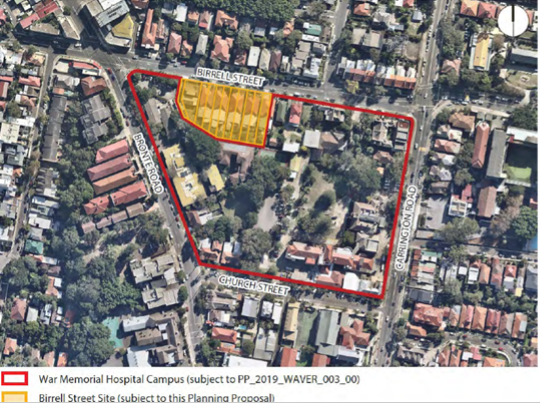
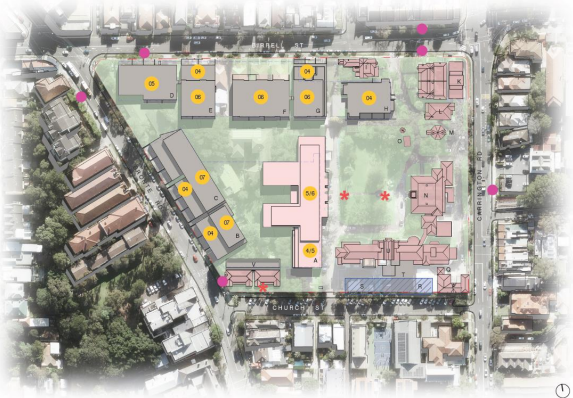
Masterplan aerial view (Photo credit: https://pp.planningportal.nsw.gov.au/

If approved, the maximum building height of the hospital will be increased from part 9.5m and 12.5m, to part 15m and 21m whilst the floor space ratio (FSR) will also go up from 0.6:1 and 0.9:1 to 1.5:1. 

“The 15m height limit is proposed to permit four storeys to the Bronte Road street frontage. The 15m is justified due to the need to accommodate generous floor to ceiling heights that are required to service the additional needs of various seniors housing uses such as residential aged care facilities,” the planning proposal reads.

“The War Memorial Hospital is an important building within the Waverley Estate that will always be preserved and respected and is not being redeveloped.  Whilst the current plan allows for the expansion of hospital services in the future, this would take place in conjunction with NSW Health and be respectful of its heritage,” the Uniting Church has stated.

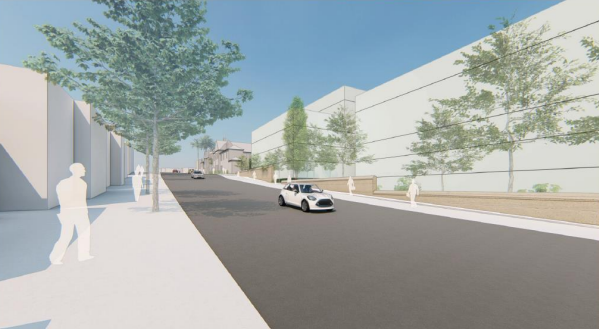
Artist’s impression of view along Birrell Street (Photo credit: https://pp.planningportal.nsw.gov.au/)

Plans for other parts of the Waverley Estate are at various stages of planning approval. The planning process is being carried out by Uniting NSW.ACT. 

View along Bronte Road & Church Street (Photo credit: https://pp.planningportal.nsw.gov.au/)

“We are committed to maintaining our ownership of the Estate and for the newly developed site to play an even greater role in meeting the needs of the local comm,” Uniting Church added.

Uniting first announced our intention to redevelop the site in May 2017. All residents since that time have entered on short-term Residential Tenancy Agreements. 

A spokesperson for Uniting said residents were relocated to other Uniting sites close by or placed with other providers, with independent living residents to stay at the site for ‘some time’ after the residential aged care at the site was closed.

Have Your Say on the ‘Charing Square’ Planning Proposal

A revised planning proposal for “Charing Square,” which aims to revitalise the Charing Cross Village in Waverley, is open for community consultation and feedback until 6 February 2022.


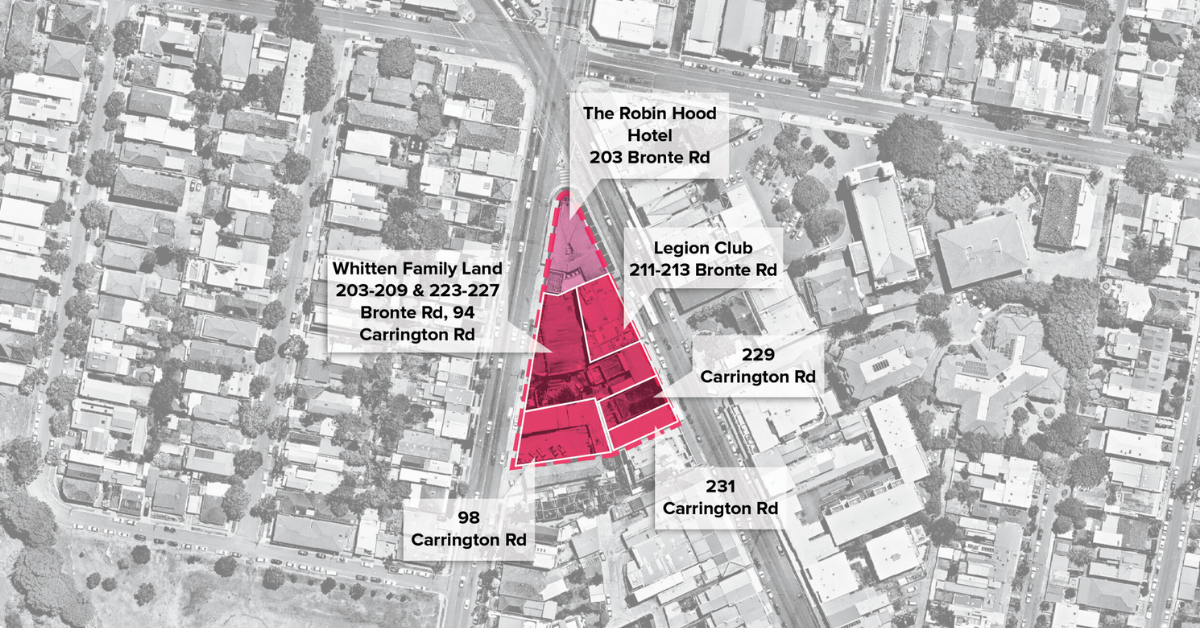
Knight Frank on behalf of Barbary Coast Investments Pty Ltd and Rayda Investments Pty Ltd lodged the planning proposal and was accepted on 24 April 2020. The planning proposal applies to Charing Cross precinct, encompassing six properties situated between Bronte and Carrington Rd in Waverley.

The specific locations are: 

  • 223-227 Bronte Road 
  • 203-209 Bronte Road 
  • 211-213 Bronte Road 
  • 229-231 Bronte Road  
  • 94 Carrington Road 
  • 98 Carrington Road  
Photo credit: CHARING SQUARE /  charingsquare.com.au 

Apart from the Robin Hood Hotel and its associated bottle shop, the site is also home to three shops, the Legion Club, Reece Plumbing and six apartments. The heritage-listed component of the hotel and garages located on Carrington Road will remain untouched. 

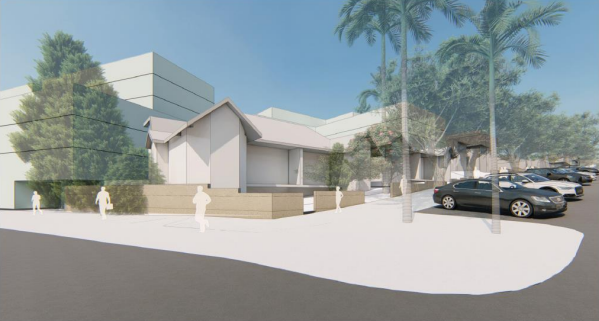
Montage of the proposed Charing Square development as seen from Carrington Road (looking north east)
Montage of the proposed development as seen from Carrington Road (looking north east)
Photo credit: Waverley Council / waverley.nsw.gov.au

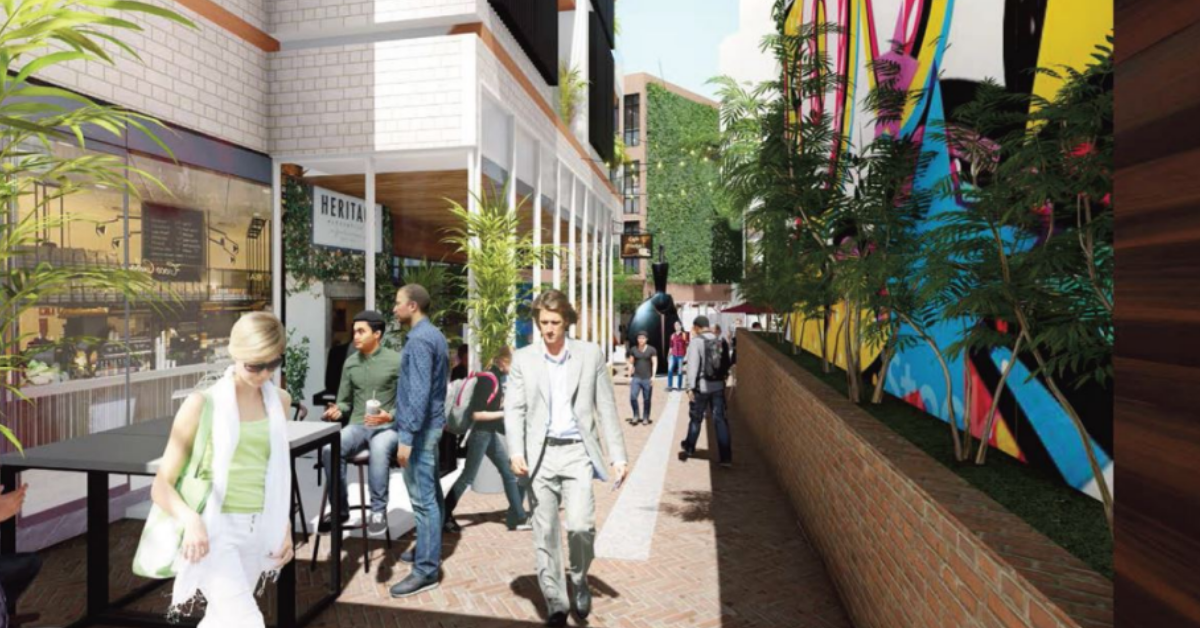
The planning proposal covers a total area of 3,473 square metres and will have a maximum height of 13.5 metres. The proposed design will feature a ground-level laneway precinct to be called “Charing Square” which will rejuvenate the precinct through a mix of retail and commercial uses.

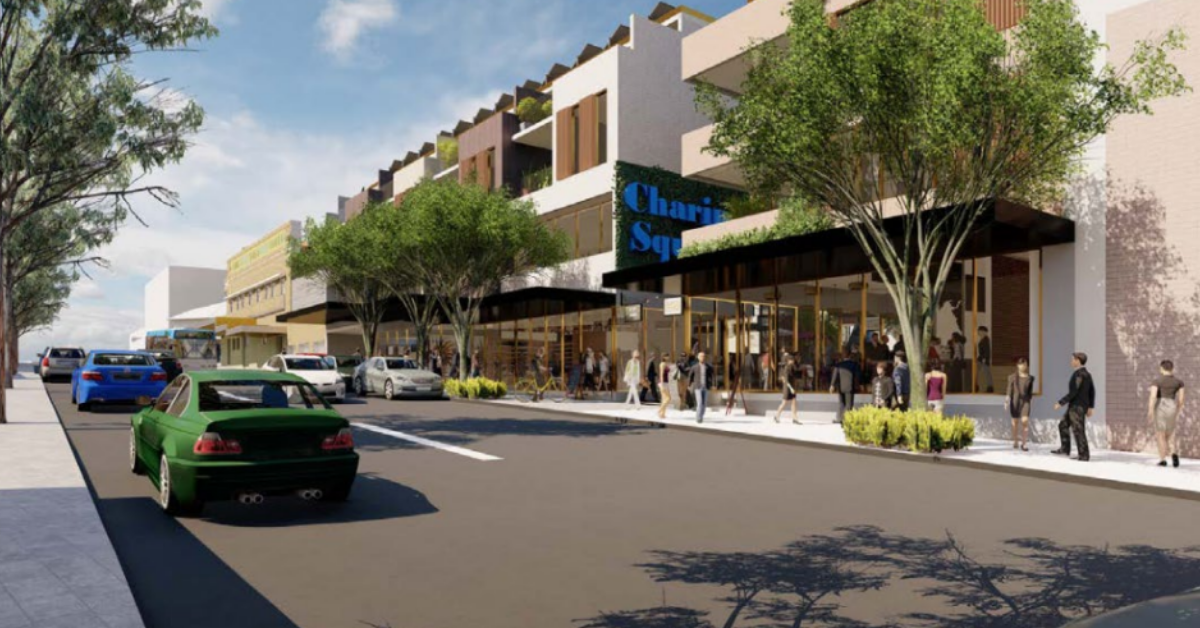
Montage of the proposed Charing Square development – Carrington Road ground level entry
Montage of the proposed development – Carrington Road ground level entry 
Photo credit: Waverley Council / waverley.nsw.gov.au

Other public benefits of the proposal include public artwork, street tree planting along Carrington Road, additional on-street parking to Carrington Road and a range of “sustainability initiatives”.

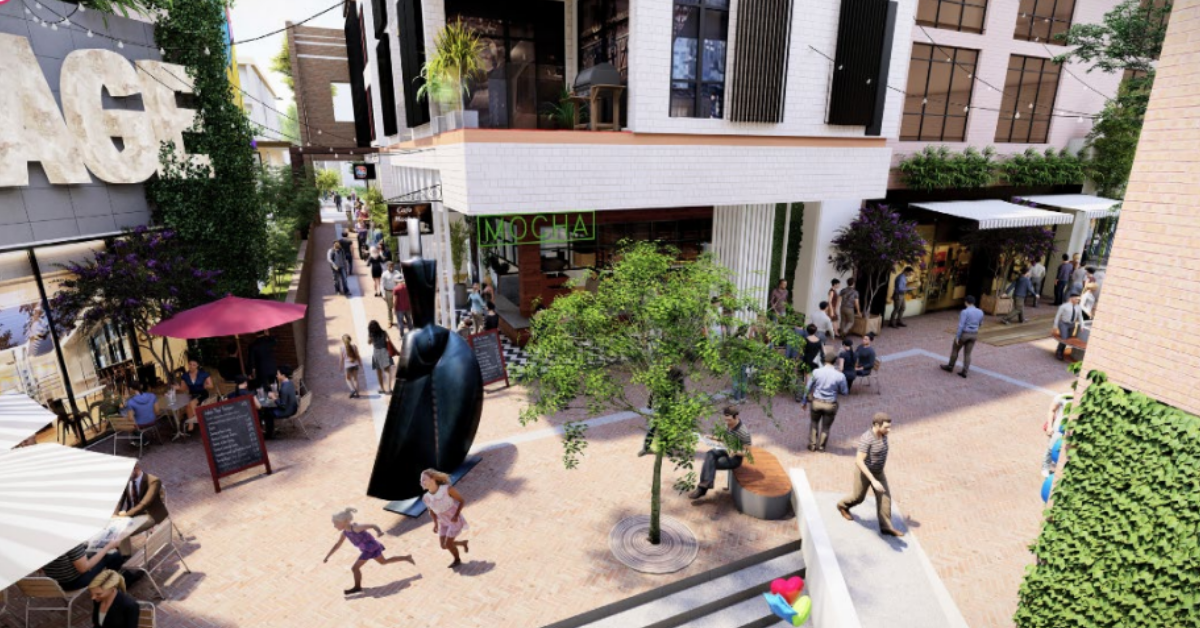
Montage of the proposed Charing Square development – looking east from within the site
Montage of the proposed development – looking east from within the site
Photo credit: Waverley Council / waverley.nsw.gov.au

The Charing Square Planning Proposal follows the previous planning proposal whose appeal was denied by the State Planning Panel on 15 November 2020. Proponents said that the proposal is not a development application but rather a “spot rezoning” request.

Hence, the planning proposal seeks to amend the Waverley Local Environmental Plan 2012 that would “allow for a greater yield of commercial and residential floor space”. 

Montage of the proposed Charing Square development – view from Bronte Road entry looking west
Montage of the proposed development – view from Bronte Road entry looking west
Photo credit: Waverley Council / waverley.nsw.gov.au

The proposed changes include an “incentivised maximum (increased) permissible floor space ratio (FSR) and the maximum permissible height of buildings (HOB)”. Specifically, the proposal seeks to increase the HOB from 9 metres to 13.5 metres and the FSR to 2.25:1 from 1:1.

The Charing Square planning proposal is currently on exhibition with the NSW Planning Department. 

The public is encouraged to have their say by submitting their feedback by 11.59 pm, Sunday 6 February 2022 through the following means:

  • Providing an online submission
  • Email to info@waverley.nsw.gov.au (reference SF21/5272) or upload a document in the feedback form
  • Post to: General Manager, Waverley Council, PO Box 9, Bondi Junction, NSW 1355 (reference SF21/5272)


The Council will then decide on the proposed changes based on the recommendations of Council officers and community feedback. If Council decides to support the proposed changes then a development application can be submitted.

‘Mystery’ COVID-19 Case Forces Waverley Catholic Primary School to Close

A Catholic primary school in Waverley has abruptly shut down face-to-face classes after a Year 3 student has tested positive for COVID-19. The student’s case has been regarded as a “mystery” as it’s deemed unlinked to the growing cluster in the Bondi area.


Officials from St Charles’ Catholic Primary School confirmed that the student, one of the 10 new cases in Waverley as of 22 June 2021, is currently in isolation and those with close contacts to the positive case have been isolating as well. 

“We are working closely with the Ministry of Health to communicate its advice to our parent community,” the school authorities said in an issued statement

NSW Health has been conducting tests and contact tracing as the school has shifted to remote learning for the remainder of Term 2. 

The Waverley Catholic primary school is due to begin its school holidays after 25 June 2021. The school officials said that they are expecting to return to face-to-face classes when Term 3 starts on 13 July 2021.

According to Dr Jeremy McAnulty of NSW Health, they are conducting a “tried and true process”  of contact tracing for the student’s case. Whilst there are no obvious links to the Bondi cluster, the experts are doing “painstaking work” to probe into the mystery deeper.

Photo Credit: Creative Commons

However, infectious diseases expert Professor Robert Booy said that primary school kids are generally considered “low risk” and are less likely to transmit the virus. 

“I’m not alarmed by a primary school child having an infection, other than the fact that we don’t know the chain of transmission,” Prof Booy said. 

However, there has been a growing concern about the existence of the more transmittable Delta variant, which has been spreading across the United Kingdom among the younger population. The experts said, based on the data from the U.K., it’s the young ones who have been susceptible to COVID at this stage since many of their older population have been vaccinated.


Recent vaccine figures in Australia show that of the 6.72 million vaccines administered as of 22 June, only 4.3 percent are fully vaccinated. The experts said that 80 percent of the population, including children, should be fully vaccinated to prevent the spread of the dominant Delta strain. 

What Makes Waverley Community Garden Popular with Green Thumbs

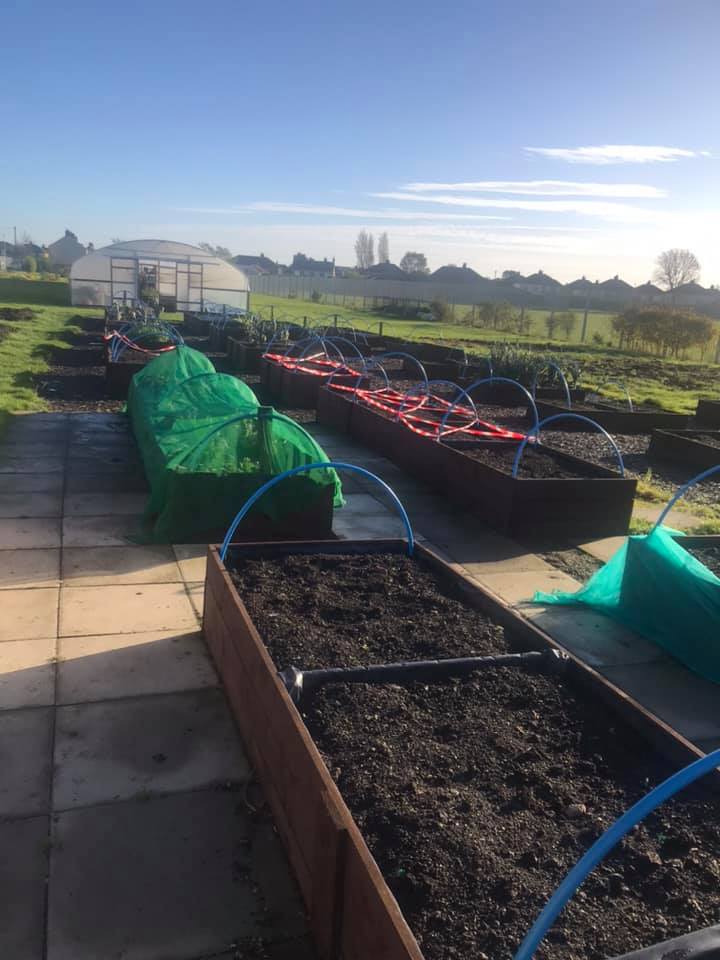
Amidst Eastern Sydney’s concrete jungle is a healthy and thriving space beloved by many green thumbs. Tucked away within the grounds of Clementson Park is the Waverley Community Garden, where plant lovers eagerly await their plot allocation.

The community garden has 45 plots but most of these have been claimed by local families and garden groups. At least three plots, however, are for communal use and as a standard procedure, propagators take turns to use the plot to grow their crops. 


Locals enjoy growing produce at the Waverley Community Garden because it has been properly set up for nurturing all sorts of plants. A rainwater tank ensures that the plots are moist whilst the soil is kept healthy using compost materials. The garden has its own worm farm for the soil as well and there is a marsh nearby that serves as a home for frogs. 

The fence line of the community garden has an abundant row of rosellas, limes, and lemon myrtle. Every month, garden groups host activities to train better gardeners through educational hands-on workshops. Some even bring working bees to help with the propagation. 

Photo Credit: Google Maps

The Waverley Community Garden became so popular that inter-suburb residents have tried to claim it for their own use. Thus, members that care for the garden for more than a decade have come up with strict criteria for plot ownership and it’s reserved strictly for residents.


“The purpose of the community garden is to provide residents who have little or no access to a garden, an opportunity to undertake their own food production, share gardening tips and engage in intergenerational learning,” the Council said. Applications to become a member of the community garden are ongoing. 

Waverley Bowling Club Residential Units Expected to Sell Out As Development Begins

The approved development of a 55-apartment unit at the site of the Waverley Bowling Club on Birrell Street has been receiving a “rush of inquiries” from interested investors, per the developer.

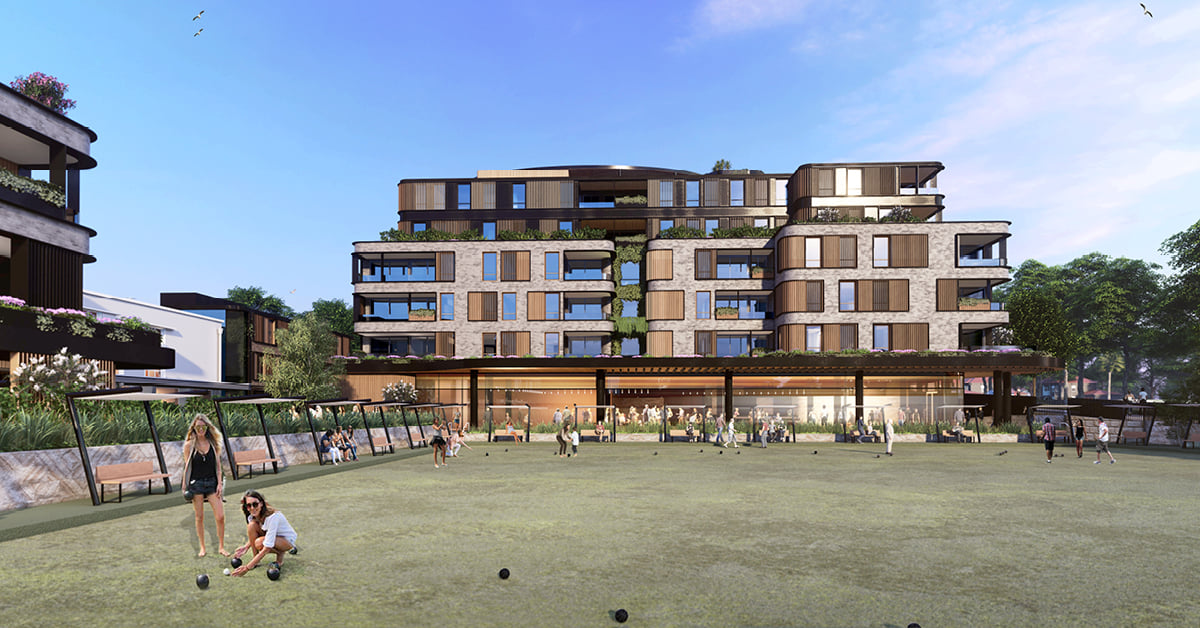
Expected to start construction in mid-2021, the Mirvac luxury retirement project is primed to become quite popular with its target demographic — the over 55 years old — as the site is will be featured with four different buildings and two new bowling greens at the centre.


One section of the land will house a six-storey residential apartment, boasting of a view of the ocean. It will have a landscaped rooftop as a communal area for residents who would love to indulge in outdoor dining and barbecues. 

The other buildings will be three-storey and two-storey structures. The development will also incorporate a club or community facility, a cafe with both indoor and outdoor seating, as well as a bistro and bar. All of these additions will look out to the greens. 

Photo Credit: Waverley Council

Eastern Suburbs Leagues Club, which owns the property, partnered with Mirvac for the development. The group’s chairman, Nick Politis, said that the upcoming changes will enable Waverley Bowling Club to thrive as a favourite events and recreational venue for the local community. 

“We are committed to delivering a niche hospitality offering that includes an indoor-outdoor casual and contemporary café, bistro and bar, with a strong garden feel reminiscent of the site’s history, where our community can enjoy a social occasion with friends and family,” Mr Politis said.

Photo Credit: Facebook

For years, Eastern Suburbs Leagues Club sought to redevelop the site or face closure. Despite the opposition from some members, NSW Planning Portal approved the plans (DA-483/2018/A) with some modifications. 


Mirvac has not yet advertised the prices of the units but sales will begin a few months after the project breaks ground. 

Waverley Council: Nocturnal Animals Now At Risk, Community Must Dim Lights

In order to protect nocturnal animals from light pollution and make the night sky significantly clearer, the Waverley Council has taken action by encouraging the dimming of lights during the evening.


In February, the Waverley Council passed a resolution to cut down on light pollution. There are currently plans in the works by the Northern Beaches Council to establish an Urban Night Sky Place at Palm Beach Headland, as well as Dark Sky Reserves — vital facilities that restrict artificial light pollution — along the coast.

Waverley mayor Paula Masselos has commented that the council supports the creation of dark spaces for the benefit of nocturnal fauna, and for a better view of the night sky.

Artificial light throughout the suburb is in excess, creating artificial skyglow which is what happens when light escapes into the sky. This makes the stars, the moon, and the night sky more difficult to see; a problem for humans and the local fauna.

Nocturnal creatures in particular need to be able to see the night sky to hunt and find mates, however light pollution is steadily making that more difficult. Other animals like turtles rely on natural light horizons to tell where the ocean is. 

Photo credit: CC-BY/Jolene Thompson/Flickr

Light pollution has caused complications for wildlife before, with artificial lights disrupting the behavioural patterns in animals such as turtles, birds, and insects. Baby turtles would find themselves scurrying towards the city, drawn to the light, and move further and further away from the ocean. Insects such as moths also find themselves drawn to light, making them easy targets for predators. 


Despite the important role artificial lights play in terms of public safety, it is essential to develop alternative safety measures as light pollution is an indicator of energy being wasted. Such examples could potentially include motion sensors for street lights to make sure they only activate when people or vehicles are nearby. 

Sydney residents can also take matters into their own hands and fight light pollution locally by replacing high-energy bulbs with cheaper and less power-consuming CFL and LED floodlights. Minimising light usage at home is also an efficient way at combating light pollution, making sure to use them only when they’re necessary.

New Waverley College Policy Bans Mullets Despite Popularity

Following an influx of students coming to school rocking the “mullet,” a hairstyle made popular in the ’80s, Waverley College has decided to ban mullets and all its variations as part of the school’s new uniform policy.


According to Waverley College’s new uniform policy, students must follow guidelines from day one. Children with mullets who fail to comply “…will be directed to the local barber or their preferred hair stylist to rectify any issues.” The controversial haircut, often described as a style that’s “business at the front and party at the back” has risen in popularity throughout the pandemic. 

Joe Exotic rocking his iconic mullet.
Photo credit: Facebook/Joseph A Maldonado-Passage (Joe Exotic)

The style was popularized between the 80’s and 90’s after legendary musicians such as David Bowie and Billy Ray Cyrus made them their own. One of the numerous ways the mullet re-entered the mainstream was through Netflix’s original documentary series Tiger King, in which former zookeeper Joe Exotic sported the 80’s hairstyle. 

Despite their popularity with the young people across the city, Waverley College isn’t the only school in Australia to ban mullets. The Wyong Christian Community School had also warned their students against sporting the hairstyle and its variants, as did the Snowy Mountains Grammar School and Bathurst’s Scots All Saints College.